


- Equine Research and Nutrition
- Website
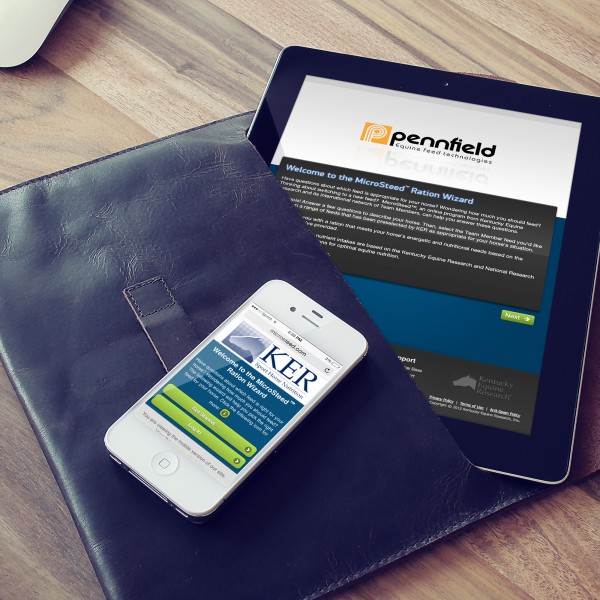
In 2012, Kentucky Equine Research (KER) – an international leader in equine nutrition – embarked on a comprehensive digital transformation initiative to modernize its customer experience across all channels. This initiative spanned multiple projects, including a full e-commerce platform replatform and redesign, the launch of a new Equinews content website (with an integrated advertising platform), the introduction of the MicroSteed™** Ration Wizard** interactive tool, enhanced digital support for KER’s conferences and educational content, and various internal infrastructure and collaboration upgrades. Each project targeted improvements for different customer types within KER’s ecosystem (from individual horse owners to industry partners and researchers), based on a well-mapped understanding of their unique journeys. This case study focuses on two flagship projects that exemplify the broader initiative: the e-commerce replatform and the MicroSteed Ration Wizard. By tackling both online commerce and interactive engagement, these projects – and the initiative as a whole – aligned KER’s digital touchpoints with its reputation for innovation, ultimately driving business growth and customer satisfaction.
- The Digital Landscape (2012): KER’s transformation took place amid rapidly changing digital trends. Mobile internet use was surging – by 2013, roughly 30% of e-commerce traffic in this sector came from smartphones. However, KER’s existing site wasn’t mobile-friendly, signaling a huge missed opportunity and the owner had already keyed into this trend and was adamant about getting KER on mobile. The team recognized that adopting modern web standards (responsive design, streamlined UX) could yield quick wins in conversion and sales. Competitors were beginning to invest in better online experiences, so KER needed to leap forward to maintain its leadership.
- Untapped Customer Engagement: Market research and KER’s experience showed that horse owners crave personalized guidance on equine nutrition. No competitor at the time offered an interactive nutrition tool, so KER saw a chance to differentiate itself. By providing a free value-add service (a ration planning wizard), KER could engage users more deeply, demonstrate expertise, and subtly guide them toward KER’s products in a consultative way. Likewise, the new Equinews content site was conceived to deliver research-based articles and tips directly to customers, meeting the thirst for dependable horse care information while keeping KER top-of-mind as an authority. All these engagement efforts would feed into the product sales funnel organically.
- High ROI Potential: Both projects (and the broader initiative) had to be delivered with a small team and limited budget, so efficiency was key. By leveraging existing platforms (like Shopify for e-commerce) and reusable UX patterns, the team anticipated a high return on investment. In other words, user experience improvements were treated as direct levers for business growth, not just cosmetic upgrades – a forward-thinking mindset for KER’s leadership at the time. The expectation was that a better online store and interactive tools would quickly pay for themselves through increased sales and operational savings.
- Holistic Customer Journeys: KER had deep insight into the different types of customers it served – from everyday horse owners and barn managers, to feed manufacturers and equine professionals – and how they interacted with KER across various touchpoints. The transformation initiative was designed to enhance each stage of these customer journeys with a unified strategy. For example, a horse owner might discover KER through an article on the new Equinews site, use the Ration Wizard to get feeding recommendations, purchase suggested supplements on the revamped store, and later engage with KER at a conference or webinar. Each project addressed a specific need in this continuum, and together they created a seamless, supportive journey for all users. This holistic approach ensured that no matter how someone engaged with KER – whether browsing content, shopping, or seeking expert advice – they encountered a modern, consistent, and user-friendly experience.
KER’s digital ecosystem was failing to meet modern user needs and business goals. The online store and website experience lagged far behind the company’s innovative brand, resulting in frustrated customers and lost revenue.

Lorem ipsum dolor sit amet, consectetur adipiscing elit. Ut elit tellus, luctus nec ullamcorper mattis, pulvinar dapibus leo.
At the outset, I led quick alignment workshops with key stakeholders from marketing, sales, and nutrition. We defined success metrics together – for example, “increase online sales by 30% in 6 months” and “generate 1000+ new leads via the tool in the first year”. By tying UX goals to concrete business outcomes, we ensured leadership support and a clear focus. We mapped out user journeys for both purchasing and nutrition guidance, pinpointing friction points to fix. KER’s team already had a deep understanding of their customer journey stages, so we validated that our planned projects covered each major stage (awareness, consideration, purchase, and retention). Given our small team and limited budget, we adopted a lean UX approach: prioritize high-impact improvements and reuse proven design solutions where possible. Rather than inventing a new shopping paradigm, we aimed to match e-commerce best practices (since users find those familiar and trustworthy). We also maintained close communication with global and cross-functional stakeholders – e.g., a brief check-in each week with the Australian office and the content team – to gather input (such as the need for multi-currency support or content integration), which informed our requirements. This up-front strategy work created a shared vision and prevented surprises, keeping the multi-project program focused and fast-moving.

Lorem ipsum dolor sit amet, consectetur adipiscing elit. Ut elit tellus, luctus nec ullamcorper mattis, pulvinar dapibus leo.
Early on, I evaluated various e-commerce platforms (Shopify, Magento, WooCommerce) to find the best fit for KER’s store. Shopify emerged as the ideal choice due to its reliability, ease of use, and all-in-one hosted solution – perfect for a company without a big IT department. Its robust theme and app ecosystem meant we could get a feature-rich store without heavy custom development. We reviewed Shopify’s integration options (crucial for connecting to KER’s inventory and accounting systems) and identified connectors that work with their financial software, Sage 360. Additionally, I researched industry case studies and trends. One valuable insight came from similar retail businesses that migrated to Shopify – they reported immediate sales increases and time savings from automation, reinforcing our decision. For the customer engagement tool, we considered building it as a native app vs. a web app. Based on broader trends (web apps reach more users without installation friction) and KER’s needs, we chose a responsive web application for the Ration Wizard. Meanwhile, to support content delivery, we examined how the new Equinews site could share design elements or data with the main site (ensuring users wouldn’t feel like they left KER’s ecosystem when reading articles). Although we didn’t conduct formal user surveys due to time, I relied on UX heuristics and competitive analysis. I examined top-performing e-commerce and educational sites in the equine and pet sectors to compile a checklist of essential features and design patterns (e.g., persistent cart icon, easy filtering, prominent search bar for e-commerce; clear categorization and email sign-ups for content). These informed our design requirements for each project and ensured we aligned with user expectations shaped by the broader web.
Lorem ipsum dolor sit amet, consectetur adipiscing elit. Ut elit tellus, luctus nec ullamcorper mattis, pulvinar dapibus leo.
Design and research for the MicroSteed Ration Wizard followed a user-centered process despite our fast timeline. We conducted a few informal interviews with target users: horse owners, barn managers, and equine nutritionist. Through these conversations, we learned what users would want from a feeding tool – simplicity, trustworthiness, and clear, actionable recommendations. Using this input, I sketched the initial user flow and wireframes for the wizard’s multi-step interface. We iterated quickly with feedback from KER’s nutrition experts to ensure the questions asked were relevant and not overly intrusive. For example, we reduced the number of inputs by making some behind-the-scenes assumptions to keep the flow moving (if a user didn’t know a detail, the system could use average values). We also included helpful microcopy and tooltips wherever users might get stuck, based on common questions our interviewees had raised. In parallel, for the Shopify site redesign, we built several different versions focusing on key pages (homepage, product page, cart, checkout) and reviewed them with internal stakeholders who were also equine customers themselves.
Throughout the design and development of the Ration Wizard, we maintained a continuous feedback loop with stakeholders. This iterative process allowed us to refine the tool progressively, incorporating valuable insights from both candid conversations with customers and online feedback. This approach ensured that we moved closer to the intended state with each iteration.
On the visual side, I created high-fidelity mockups and a style guide to ensure the new store, the wizard, and other new web pages (like Equinews) had a consistent look and feel aligned with KER’s branding. The design emphasized clarity and professionalism with a touch of friendliness (through warm imagery and approachable language) to invite users in.
Lorem ipsum dolor sit amet, consectetur adipiscing elit. Ut elit tellus, luctus nec ullamcorper mattis, pulvinar dapibus leo.
Once designs were approved, we moved into an agile implementation phase for both projects. For the Shopify store, much of the work was configuration and content migration. I worked hands-on in Shopify’s editor to customize the theme, set up navigation, and load product data. We ran a content migration rehearsal – importing all product info, images, and customer accounts into a Shopify test store. Meanwhile, the Ration Wizard was developed by a small external dev team in parallel. I provided detailed UX specifications and we collaborated in short sprints, reviewing progress every few days. This tight feedback loop meant I could refine the UI as it was built, and the developers could tweak functionality based on testing results. Before full launch, we did a soft launch for each component: we made the new Shopify site live on a staging URL and invited a handful of loyal customers and internal staff to use it and give honest feedback. Similarly, we rolled out the wizard quietly on KER’s site (with a “beta” label) without a big announcement initially. These trial runs were invaluable. They helped us ensure the checkout process (tax calculations, shipping options, etc.) worked correctly in the real world and that users understood the wizard without guided help. We addressed minor issues (like adjusting some shipping rates and clarifying a wizard question) before the official launch. Importantly, we put a redirect plan in place: all important URLs from the old store (product pages, categories) redirected to the corresponding pages on the new site so that SEO rankings and customer bookmarks seamlessly transferred. When launch day came, we switched over to the new store with virtually no downtime. Post-launch, we closely monitored analytics and user feedback, ready to make quick iterations. For example, after seeing some users start the wizard but not finish, we added an email capture option to let them save progress (so we could follow up and also not lose the lead). This agile, iterative approach ensured that KER’s digital transformation was smooth, user-validated, and continuously improving even after go-live.
Lorem ipsum dolor sit amet, consectetur adipiscing elit. Ut elit tellus, luctus nec ullamcorper mattis, pulvinar dapibus leo. Lorem ipsum dolor sit amet, consectetur adipiscing elit. Ut elit tellus, luctus nec ullamcorper mattis, pulvinar dapibus leo. Lorem ipsum dolor sit amet, consectetur adipiscing elit. Ut elit tellus, luctus nec ullamcorper mattis, pulvinar dapibus leo. Lorem ipsum dolor sit amet, consectetur adipiscing elit. Ut elit tellus, luctus nec ullamcorper mattis, pulvinar dapibus leo.
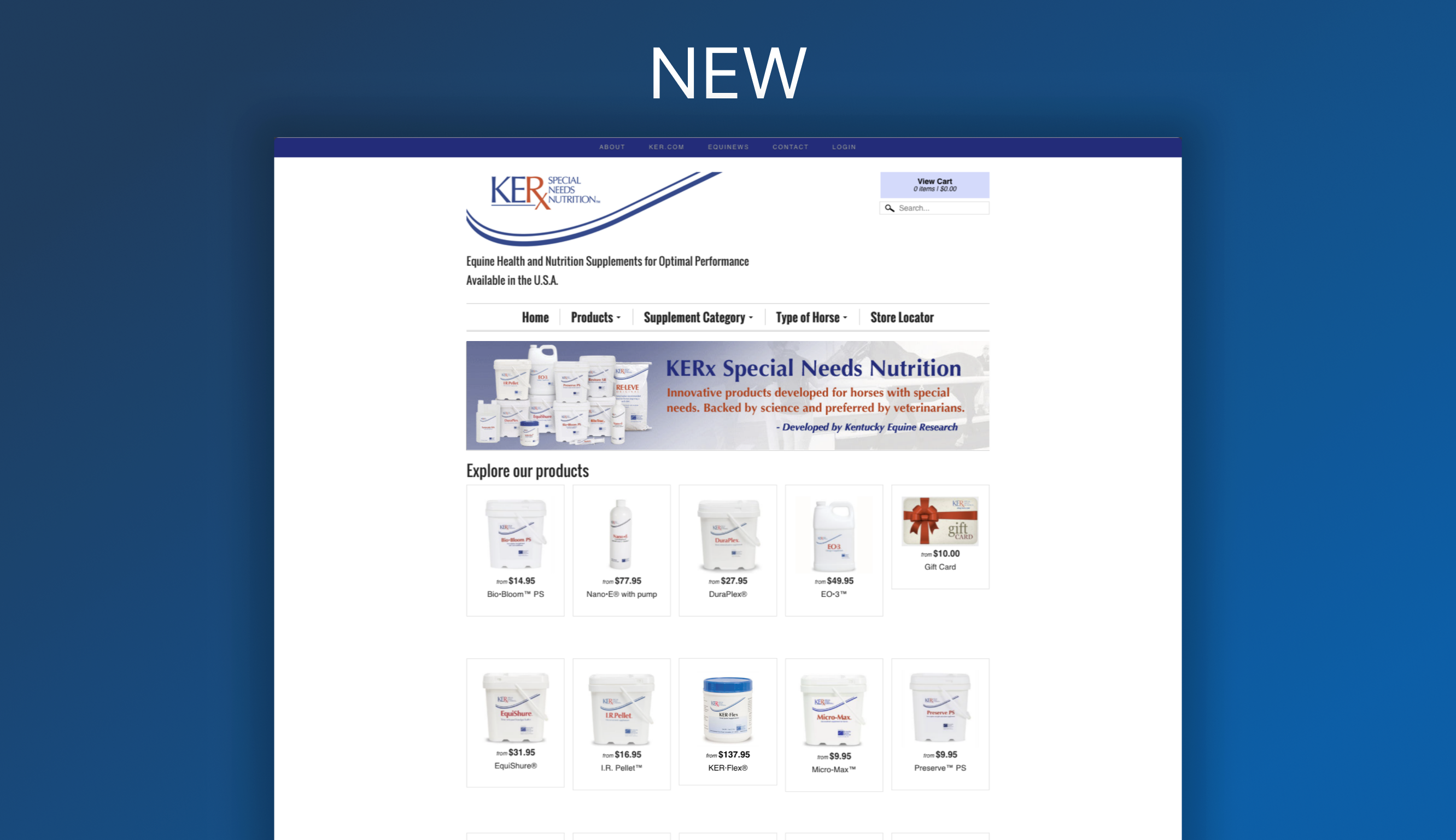
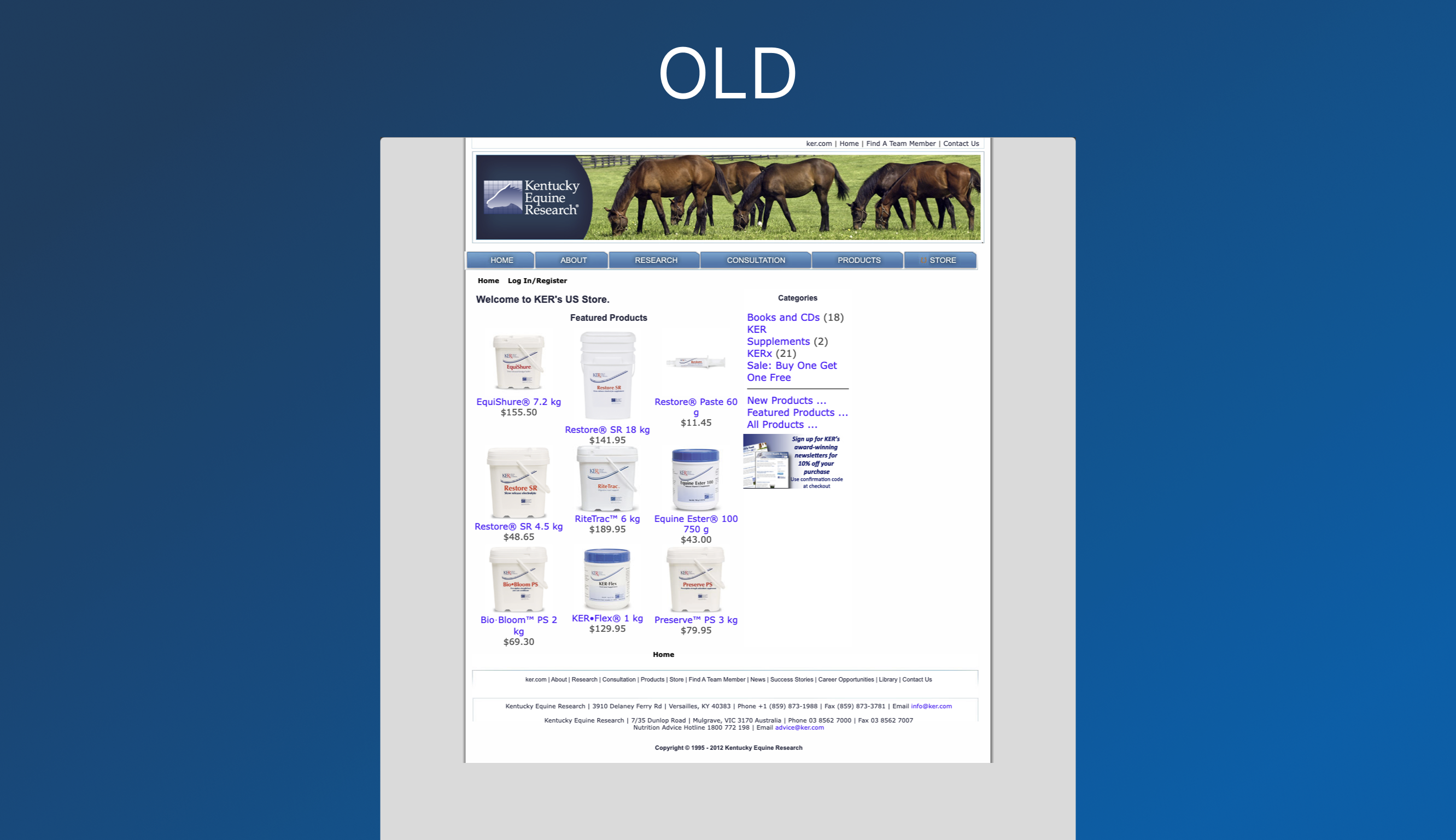
Key Features Implemented: We transformed KER’s clunky online store into a sleek, user-friendly Shopify storefront. Starting with a well-supported Shopify theme, I customized the design to match KER’s branding and optimized it for easy navigation and trust. Major improvements included:
- Clean, Intuitive UI: The new homepage features clear product categories (“Feeds”, “Supplements”, etc.) with descriptive images, making it immediately obvious where to find products. A prominent search bar with auto-suggest helps users jump directly to what they need. The overall aesthetic was updated to feel modern and credible – using high-quality photos of horses, a consistent color scheme, and clean typography – reinforcing KER’s professional image and heritage.
- Mobile-First Responsiveness: The site was designed mobile-first and is fully responsive. On phones, menus collapse into a simple hamburger menu, product grids become single-column scrollable lists, and buttons are large for easy tapping. We optimized load times for mobile by compressing images and minimizing scripts; as a result, even on a 3G connection the pages load quickly (resolving the previous bounce-rate issue on mobile). A fixed cart icon on mobile provides one-tap access to the shopping cart at any time. The shopping experience is now just as effective on a smartphone in a barn as it is on a desktop in the office.
- Enhanced Product Pages: Every product page was redesigned as a one-stop information hub. We added multiple product images (with zoom capability), succinct yet informative descriptions highlighting key benefits, and technical details organized in tabs or collapsible sections (e.g., ingredients, feeding instructions, nutritional analysis). We integrated a customer reviews section for social proof, which was completely missing before. If a user was unsure about a product, relevant resources are now cross-linked – for example, a supplement’s page might link to a KER research article about that supplement’s key ingredient, or suggest using the Ration Wizard (“Not sure if this feed is right for your horse? Try our Ration Wizard tool!”). These additions educate customers and build trust, making them more confident to add products to their cart.
- Streamlined Checkout Process: We replaced the old confusing, multi-page checkout with Shopify’s optimized, minimal-step checkout flow. It guides users through shipping and payment in a clear sequence with a progress indicator. We enabled convenient options like guest checkout (no forced account creation) and multiple payment methods (major credit cards, PayPal, etc.). Security badges and an SSL certificate notice are displayed to reassure users that their data is safe. The result is a frictionless checkout where users encounter far fewer distractions or hurdles. This directly addressed the cart abandonment problem – early data showed significantly more carts converting to orders after the change.
- Automation & Integration: Behind the scenes, the new store is smarter and more efficient. We connected Shopify to KER’s back-end systems so that online orders flow directly into their accounting and inventory software. This automation (enabled by the OneSaas integration) means inventory levels update in real-time and staff no longer spend hours re-entering web orders manually 1. We also integrated the store with KER’s email marketing platform – customers are tagged by what they purchase, allowing for personalized follow-up campaigns (like supplement refill reminders or newsletters tailored to their interests). For KER’s international audiences, the Shopify setup handles multi-currency pricing and region-specific shipping rules, ensuring, for example, that an Australian customer sees prices in AUD and appropriate shipping options. In short, the replatform not only improved the customer-facing experience but also dramatically streamlined operations, setting KER up for easier scalability and marketing agility.
Lorem ipsum dolor sit amet, consectetur adipiscing elit. Ut elit tellus, luctus nec ullamcorper mattis, pulvinar dapibus leo. Lorem ipsum dolor sit amet, consectetur adipiscing elit. Ut elit tellus, luctus nec ullamcorper mattis, pulvinar dapibus leo. Lorem ipsum dolor sit amet, consectetur adipiscing elit. Ut elit tellus, luctus nec ullamcorper mattis, pulvinar dapibus leo. Lorem ipsum dolor sit amet, consectetur adipiscing elit. Ut elit tellus, luctus nec ullamcorper mattis, pulvinar dapibus leo.
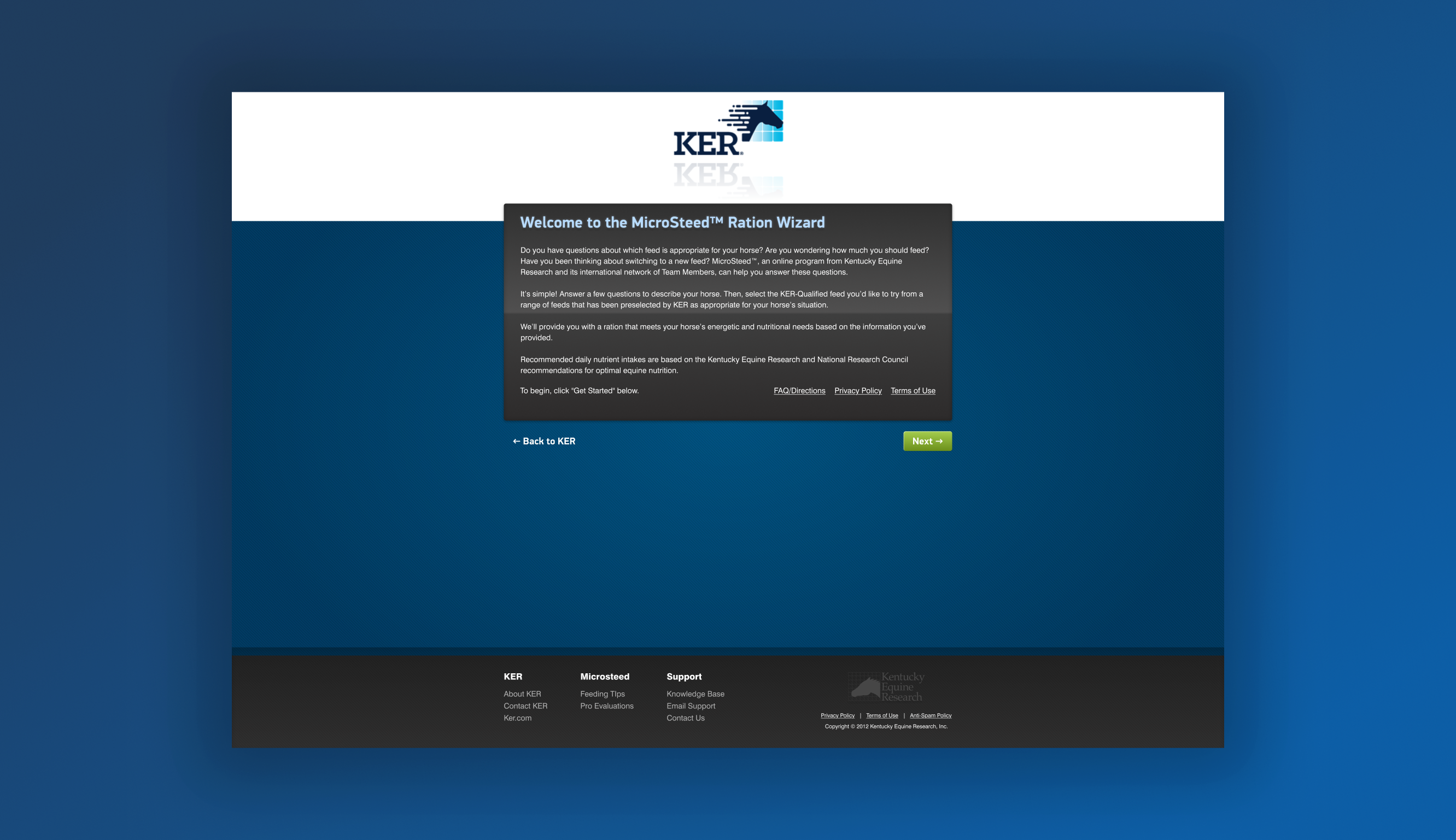
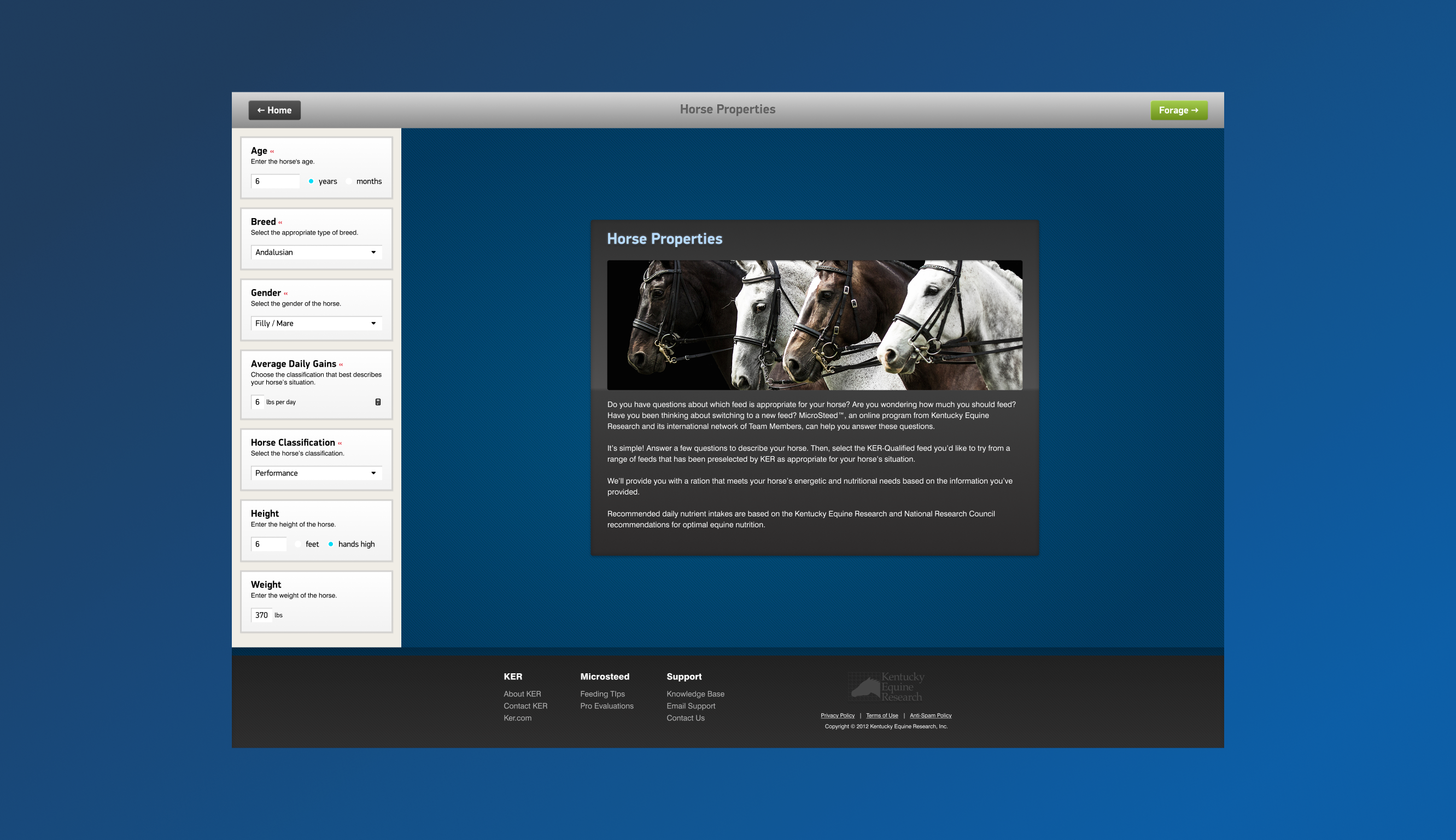
Purpose & Concept: The Ration Wizard is an interactive web application that helps horse owners create a customized feeding program for their horse. It was designed to translate KER’s nutrition expertise into a self-service digital experience. Instead of reading whitepapers or calling an expert, users get personalized, science-backed feed recommendations in minutes, for free. This tool serves both as a genuine value-add for KER’s customers and a subtle marketing funnel for KER’s feeds and supplements. By empowering users with knowledge, it fosters trust and often leads them to products that fit their horse’s needs.
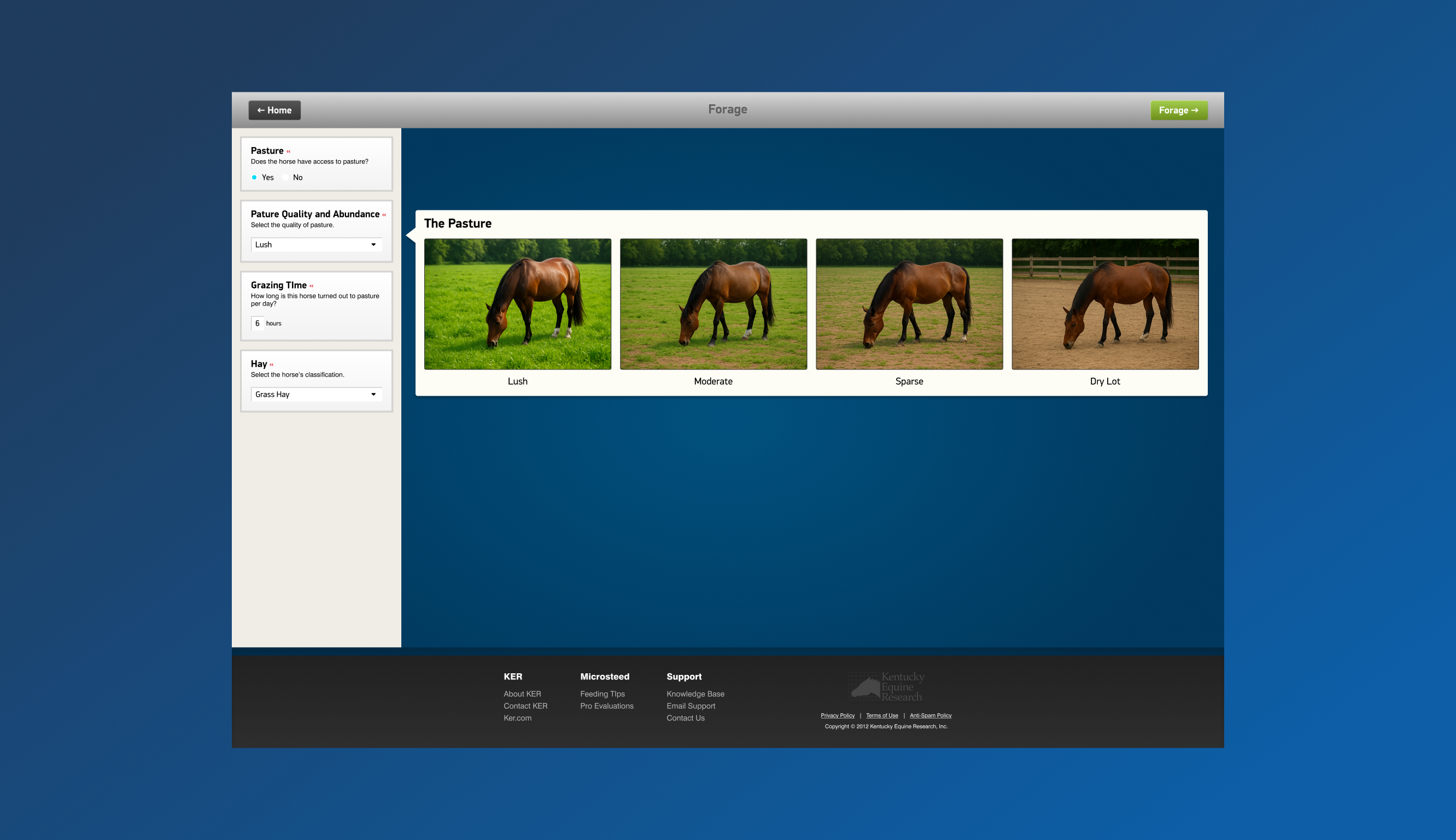
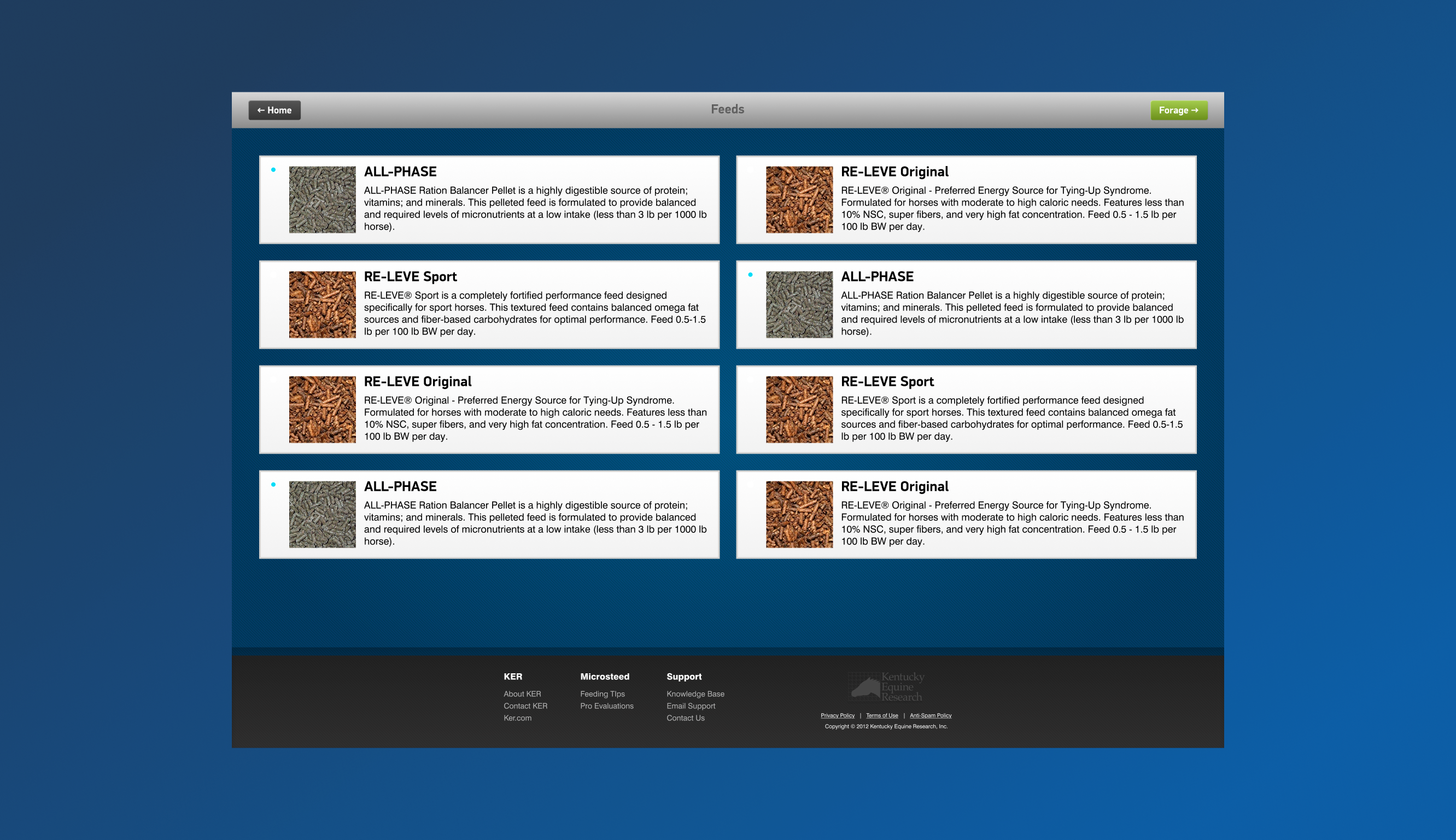
How It Works: The wizard is presented as a friendly multi-step form with five stages: Horse Info → Goals → Current Diet → Recommendations → Results. Users are guided step-by-step, first entering basic information about their horse (age, weight, breed, activity level, etc.), then specifying their nutrition goals (e.g., weight gain, higher performance, general health), and detailing what the horse currently eats (forage type, amount, and any existing feeds or supplements). The wizard’s engine crunches these inputs against KER’s extensive equine nutritional requirements dataset. In the Recommendations step, the user is presented with one or more feed and supplement options that would fill the nutritional gaps identified – for instance, suggesting a high-fat feed if the horse needs more calories, or a specific vitamin supplement if there’s a nutrient deficiency. The user can adjust any inputs and re-calculate or proceed to see details. In the final Results step, the user sees a personalized feeding plan, for example: “Champ should receive 4 lbs of KER PerformancePlus feed and 2 oz of Nano-E® Vitamin E supplement daily.” This summary is accompanied by interactive charts that visualize Champ’s daily nutrient intake, highlighting how the recommended diet meets all requirements. The results page also provides additional guidance, like management tips (“Split the grain concentrate into two meals for better digestion”) or alternative suggestions if certain feeds aren’t available. Importantly, from the results page the user can take action: there’s a call-to-action to “Shop Recommended Feeds”, which adds the recommended KER products to the online store cart (or directs them to a dealer locator for partner-brand feeds). There’s also an option to “Save your horse’s profile,” prompting the user to create a KER account. Saving allows the user to revisit their plan later and enables KER to follow up, effectively turning a once-anonymous web visitor into a known lead.
User Experience & Design: The wizard’s UI was crafted to be approachable and educational. Each step uses layman’s terms, with any technical jargon explained in plain language. For example, when asking for the horse’s Body Condition Score (BCS), the interface provides a simple graphic and description of what each score means. Helpful defaults and validation are in place – if a user isn’t sure of the horse’s exact weight, the wizard offers an estimated range based on breed and height. A progress bar at the top of the wizard shows users how close they are to completion, encouraging them to finish. The design uses KER’s branding and horse imagery to feel like an integrated part of the KER site. Throughout the process, we struck a balance between not overwhelming the user and gathering enough detail to make solid recommendations. The tone is supportive and informative, akin to having a virtual nutritionist guiding you. We also paid attention to performance; the wizard loads quickly and is fully responsive, so even in a barn on a phone, a user can easily complete it. The end result transforms what could be a daunting task (figuring out a feeding program) into an engaging online experience.
Integration & Partner Versions: We built the wizard to be adaptable for KER’s business partners as well. Each of KER’s 35+ global feed distributor partners received a co-branded version of the tool, pre-loaded with their specific feed products. For instance, a user accessing the wizard through a partner’s website would see recommendations featuring that partner’s feed lines (formulated with KER’s guidance) instead of KER’s own branded feeds. This strategy greatly expanded the tool’s reach and strengthened KER’s B2B relationships. Technically, it’s the same core engine with configuration tweaks for each partner – a scalable approach that allowed rapid deployment across regions. The wizard lives on the web (no app install needed), and because it is responsive, it works smoothly on mobile devices and tablets as well as desktops. We even included an offline-capability layer (caching inputs) so if someone loses internet mid-way, they won’t have to start over. By the end of this project, KER had not just an enhanced store, but also a powerful interactive tool that embodied its brand promise: scientific expertise made accessible for every horse owner.
Lorem ipsum dolor sit amet, consectetur adipiscing elit. Ut elit tellus, luctus nec ullamcorper mattis, pulvinar dapibus leo. Lorem ipsum dolor sit amet, consectetur adipiscing elit. Ut elit tellus, luctus nec ullamcorper mattis, pulvinar dapibus leo. Lorem ipsum dolor sit amet, consectetur adipiscing elit. Ut elit tellus, luctus nec ullamcorper mattis, pulvinar dapibus leo. Lorem ipsum dolor sit amet, consectetur adipiscing elit. Ut elit tellus, luctus nec ullamcorper mattis, pulvinar dapibus leo.
The final piece of KER’s digital transformation involved tying everything together into a cohesive, scalable ecosystem and extending its benefits globally. Key aspects of this included:
- Unified Back-End Integration for Efficiency: We ensured that all new digital platforms plugged smoothly into KER’s operations. The Shopify store’s integration with accounting/inventory (via OneSaas) and the email marketing system meant there is now a single source of truth for data across online sales channels 1. Orders, customer info, and stock levels stay consistent everywhere, and staff can trust the system to handle routine tasks. This eliminated duplicate data entry and significantly reduced errors (for example, preventing scenarios like selling out-of-stock items, which had been an issue before). Similarly, we set up the Ration Wizard to feed new lead information directly into KER’s CRM, so the sales team could follow up on high-value prospects (like large stable managers using the tool) without any manual import. In essence, the tech solutions were not siloed – they actively supported the workflow of multiple teams (marketing, sales, fulfillment, research) and amplified the productivity gains beyond the UX improvements alone.
- Consistent Design & Cross-Linking: To maintain a seamless user experience, we aligned the design elements and navigation across the various platforms introduced in the initiative. The new Equinews site was built using the same design language as the e-commerce site (typography, color palette, header/footer structure), so users felt it was all part of one KER online presence. We also implemented cross-linking between platforms: the Equinews articles often feature calls-to-action linking to related products or the Ration Wizard, and conversely the e-commerce site highlights content (“Learn about equine joint health in our Equinews section”) and events, etc. KER’s conference pages were revamped to match this style as well, and to include clear links for attendees to explore KER’s products and resources. This way, no matter where a user begins – reading an article, shopping, or checking an event – they can easily navigate to other parts of KER’s digital ecosystem. The consistent branding and integration reinforce that all these touchpoints are facets of the same KER experience.
- Global and Partner Rollout: As noted, the Ration Wizard was deployed internationally through partner sites, and the Shopify store was configured to handle global customers. These efforts meant KER’s digital transformation wasn’t limited to the US market but benefitted their worldwide audience. For example, after launch, KER’s Australian division reported improved customer satisfaction using the new tools (thanks to faster local load times and relevant product content), and European partners were enthusiastic about the localized wizard versions they could offer their clients. By designing with global considerations from the start (multi-currency, regional product data, translation-ready interfaces), we avoided one-size-fits-all pitfalls and created a solution that flexibly adapts to different markets.
- Holistic User Experience: Most importantly, we merged the commerce, content, and engagement aspects into one holistic user journey. The website now naturally routes users between learning and shopping. If someone comes via a research article on Equinews, they can discover related products or the Ration Wizard seamlessly. If they come to buy a product on the store, they see links to learn more (blog posts, nutrition libraries) or to use the wizard for validation. Similarly, conference and event announcements on the site boost traffic to educational content and vice versa. This unified ecosystem leads to higher overall engagement – customers spend more time within KER’s digital environment, increasing the likelihood of loyalty and repeat business. It also consistently reinforces KER’s brand message at every touchpoint: whether you’re browsing knowledge or buying feed, you experience the company’s commitment to advancing equine health and nutrition.
This multi-project initiative provides several valuable lessons on executing a successful digital transformation:
- UX as a Growth Driver: Improving the user experience can directly drive business outcomes. It was striking to see how addressing basic usability issues (like site speed, mobile layout, checkout simplicity) led to significant revenue gains. This reinforced the idea that UX design isn’t just about making things look nice – it’s a strategic lever for growth. In KER’s case, focusing on customer needs (convenience, clarity, trust) translated almost one-to-one into metrics like higher sales and engagement. The takeaway: invest in user experience where it matters most, and the business metrics will follow.
- Leverage Proven Solutions: With a small team and ambitious goals, we decided to build on established platforms and design patterns rather than create everything from scratch. Choosing Shopify and using its standard features meant we benefited from e-commerce best practices out-of-the-box (and we avoided reinventing the wheel on things like shopping cart logic). Similarly, designing the Ration Wizard as a familiar step-by-step wizard leveraged a pattern users already understand. This strategy paid off in speed, reliability, and usability – we delivered faster, and users found the solutions intuitive. The key lesson is to innovate in areas that truly differentiate your business, but don’t shy away from turnkey solutions for common requirements. It frees up your resources to focus on what truly sets your experience apart.
- Data-Driven & Holistic Approach: From start to finish, we kept a data-informed, big-picture mindset. We set clear success metrics at the beginning, which guided design decisions (e.g., knowing we wanted to raise the conversion rate led us to streamline the checkout and add social proof elements). After launch, data validated our work and highlighted areas for continuous improvement. Just as importantly, we addressed the customer journey holistically, not as isolated pieces. By solving for shopping, educational, and engagement needs together, we created a synergy: the wizard fed the store with educated buyers; the store’s success reinforced the value of the content and tools; the content site funneled interested readers into becoming customers. The lesson: take a step back and consider the entire ecosystem – sometimes the biggest gains come from linking initiatives together rather than tackling one narrow slice at a time.
- Customer Value First (Trust = Loyalty): We learned that putting user value first creates a virtuous cycle for the business. The Ration Wizard’s success hinged on it being genuinely helpful without immediately asking for anything in return – essentially giving before asking. By helping customers solve a problem (figuring out their horse’s diet) in an unbiased way, KER built tremendous trust and goodwill. Those trusting, engaged users then became some of KER’s best customers and brand advocates. Similarly, providing free high-quality content via Equinews or improving the event experience showed customers that KER cares about their needs, not just sales. The takeaway: when a company consistently delivers value and demonstrates care for the user’s goals, it wins loyalty that translates into long-term business benefit.
- Stakeholder Collaboration & Scope Management: On the execution side, a key lesson was the importance of involving all relevant stakeholders early and managing scope tightly in a multi-faceted project. We hit a bump when a regional office (Australia) wasn’t initially looped in on the e-commerce changes – fixing that early saved headaches later and improved the final product. Regular check-ins, demos, and open channels for feedback kept everyone aligned and bought-in. We also kept scope disciplined by distinguishing “phase 1 must-haves” from “phase 2 nice-to-haves.” This ensured we delivered on core promises without getting sidetracked by feature creep. Post-launch, having a backlog of enhancement ideas (instead of trying to do it all at once) meant we could continue improving in iterations. Clear communication, inclusive collaboration, and phased delivery turned what could have been an overwhelming program into a series of manageable, successful launches.
- Unified Vision Across Multiple Projects: Executing several related projects in parallel taught us the value of a unified vision. Each project team (store, wizard, content, etc.) had its own tasks, but we made sure all were guided by the same overarching goals and user-centric principles. This prevented the “silos” effect and resulted in a cohesive end-to-end experience for the customer. The success of KER’s initiative owes a lot to treating the transformation as one program with coordinated parts, rather than a bunch of disconnected projects. The key takeaway is that multi-project initiatives require strong alignment on vision and close coordination, but when done right, they can transform an organization’s relationship with its customers on multiple fronts simultaneously.
In retrospect, KER’s Digital Transformation and Marketing Initiative was a resounding success. By addressing multiple touchpoints – commerce, content, tools, and internal processes – the company not only solved immediate pain points but also future-proofed its business with a customer-centric digital ecosystem. This case study demonstrates how a strategic blend of user-centric design, modern technology, and cross-team collaboration can reinvent a business’s connection with its audience. For me as the product design lead, it was a gratifying journey that confirmed how the right UX choices, executed holistically, create win-win outcomes: happier customers and a healthier, more innovative business.